
Showing posts with label HEALTH. Show all posts
Showing posts with label HEALTH. Show all posts
Friday, 14 September 2012

Saturday, 8 September 2012
Fasting Diets
Though it may not be
the most practical -- or safest -- diet, some people use fasting as a way to
lose weight or to cleanse the body of toxins, although some experts say our
bodies are perfectly equipped with organs that already do the job. How fasting
is used for weight loss varies by diet. Some fasting diets involve drinking
nothing but water or eating only raw foods for a period of one or more days,
while others restrict food on alternate days. Certain fasting diets only allow
liquids like water, juice, or tea, while others dramatically cut calories but
do not eliminate food altogether.
Does Fasting Help You
Lose Weight?
When you fast, your
body is forced to dip into energy stores to get the fuel it needs to keep
going, so you will lose weight. The big question is how long you will keep that
weight off. Because food was often scarce for our ancestors, our bodies have
been genetically programmed to combat the effects of fasting. When you eat less
food, your metabolism slows down to conserve energy. Then, when you go back to
your usual diet, your lowered metabolism may cause you to store more energy,
meaning that you will probably gain back the weight you lost and possibly even
put on more weight when eating the same calories you did before the fast.
As you fast, your body
will adjust by reducing your appetite, so you will initially feel less hungry.
But once you have stopped fasting, your appetite hormones will kick back into
gear and you may actually feel hungrier and be more likely to binge.
Research has shown that
fasting on alternate days can help people lose weight, but not for long. In one
study, people who followed an alternate-day fasting diet shed weight, even when
they ate all they wanted on the nonfasting days. However, they could not
maintain the weight loss over time.
Can Fasting Detoxify
the Body?
Some fasting diets
claim that they can cleanse the body of impurities. However, there is no
evidence that fasting detoxifies your body, or that your body even needs to be
detoxified. It is naturally designed to remove toxins through the skin (by
sweating), liver, colon, and kidneys.
Could Fasting Help You
Live Longer?
Studies of fasting in
both rodents and humans appear to indicate a connection between calorie
restriction and longevity. In one study of overweight men and women, a
calorie-restricted diet improved markers of aging, such as insulin level and
body temperature.
Fasting might also
improve longevity by delaying the onset of age-related diseases including
Alzheimer's, heart disease, and diabetes. One study showed that skipping meals
once a month, as members of the Mormon religious group do, reduces the risk of
clogged arteries (the build-up of plaque that can lead to heart attacks and
strokes). However, it is not clear from this research whether fasting alone or
the Mormons' generally healthier lifestyle (they also abstain from coffee,
alcohol, and smoking) is responsible for the improved heart health.
Researchers do not yet
know whether the effects of fasting translate into an actual increase in
lifespan, because they have not followed people for long enough periods of
time. However the concept of intermittent fasting, such as skipping a meal
purposefully on an intermittent basis, is gaining attention. It appears to be a
relatively safe way to reduce caloric intake that is easier for some people to
do. The data however is not there yet nor is this an accepted practice.
Fasting for a day or
two probably won't hurt people who are generally healthy, provided they
maintain an adequate fluid intake. However, fasting entirely for long periods
of time can be harmful. Your body needs a variety of vitamins, minerals,
and other nutrients from food to stay healthy. Not getting enough of these
nutrients during fasting diets can lead to symptoms such as fatigue, dizziness,
constipation, dehydration, gallstones, and cold intolerance. It is possible to
die if you fast too long.
Even short-term fasting
is not recommended for people with type I diabetes, because it can lead to
dangerous dips and spikes in blood sugar. Women who are pregnant or
breastfeeding, or anyone with a chronic disease, should not fast.
Before you go on any
type of new diet, particularly one that involves fasting, talk to your doctor
to find out whether it is safe and appropriate for you. Also ask your doctor to
refer you to a registered dietitian, who can show you how to design a healthy
eating plan.
Monday, 3 September 2012
National Awareness Week to Help Canberra Asthmatics

Spring season, which is often referred with ideas of rebirth, renewal, re-growth and happiness, but for some it is a season of allergies. All the allergy sufferers have to face hard time during the season, but for a few others it is worse. For asthma sufferers, the season exaggerates their problem.
The time is terrible for all those parents, whose children suffer severe asthma and have to attend schools or are sent to child care.
However, to wave off their worries, Asthma Foundation ACT has set this week to be celebrated as National Awareness Week. The aim of this campaign will be to alert pre-schools and child care centers in regards of asthma and the season. Further, it will be reminding them of the emergency asthma management training, which has been informed to be compulsory and has to be implemented by 1 January, 2013.
Asthma Foundation Chief Executive Nathalie Maconachie asserted that the season's demand from Canberra's 35,000 asthmatics is more than that from others. The sufferers are left to tackle their condition with exaggerating symptoms.
She said, "A lot of people are triggered by pollen and certainly about 80 % of people with asthma also have allergic rhinitis". It has been emphasized that if symptoms of asthma are identified at the right time, it reduces the chances of hospitalization.
Saturday, 1 September 2012
Spray-on coating helps keep bananas from spoiling
Just about everyone loves bananas, but there is one problem with the things – they have a way of becoming overripe before they can be eaten. Yesterday, however, a scientist from China’s Tianjin University of Science and Technology announced the development of a spray-on coating that is capable of keeping picked bananas fresh for almost two weeks.
Like other fruit and vegetables, bananas remain “alive” after being harvested, and respire (or breathe) through their skin. The faster that a fruit respires, the faster that it ripens. Unlike many other fruits, however, the respiration rate of bananas does not slow down after they’re picked. This causes them to ripen more quickly than most fruits, to the point that they often become brown and mushy before they’re consumed.

The coating, which is a type of hydrogel, works by slowing down respiration and killing a type of bacteria that causes the fruit to rot. Its key ingredient is chitosan, which is a compound found in crustacean shells – something that the seafood industry generates plenty of. Researchers have also looked into using chitosan for applications such as biocompatible transistors, self-healing paint, and virus filters.
When a team led by Dr. Xihong Li sprayed the hydrogel onto green bananas, they remained unspoiled for up to 12 days. How long bananas normally last is somewhat subjective, as different people like them at different stages of ripeness, although generally one week is about their maximum shelf life.
Wednesday, 29 August 2012
FRUITS & VEG VS HUMAN BODY
Fruits and
vegetables are the source of vitamins and minerals to our human body.
Sometimes, people don’t really know the implication of the statement “You are what you eat”.
However, you will discover that the foods which are good for your
health and your body parts have a closer resemblance than you would have
thought. Now, check out some interesting comparison between these
health foods and the human body.


Slice a carrot and it looks just like an eye, right down to the pattern of the iris. It’s a clear clue to the importance this everyday veg has for vision. Carrots get their orange color from a plant chemical calledbetacarotene, which reduces the risk of developing cataracts. The chemical also protects against macular degeneration an age-related sight problem that affects one in four over-65s. It is the most common cause of blindness in Britain. But popping a betacarotene pill doesn’t have the same effect, say scientists at Johns Hopkins Hospital in Baltimore

The gnarled folds of a walnut mimic the appearance of a human brain - and provide a clue to the benefits. Walnuts are the only nuts which contain significant amounts of omega-3 fatty acids. They may also help head off dementia. An American study found that walnut extract broke down the protein-based plaques associated with Alzheimer’s disease. Researchers at Tufts University in Boston found walnuts reversed some signs of brain ageing in rats. Dr James Joseph, who headed the study, said walnuts also appear to enhance signalling within the brain and encourage new messaging links between brain cells.

A tomato is red and usually has four chambers, just like our heart. Tomatoes are also a great source of lycopene, a plant chemical that reduces the risk of heart disease and several cancers. The Women’s Health Study — an American research program which tracks the health of 40,000 women — found women with the highest blood levels of lycopene had 30 per cent less heart disease than women who had very little lycopene. Lab experiments have also shown that lycopene helps counter the effect of unhealthy LDL cholesterol. One Canadian study, published in the journal Experimental Biology and Medicine, said there was “convincing vidence" that lycopene prevented coronary heart disease.

Our lungs are made up of branches of ever-smaller airways that finish up with tiny bunches of tissue called alveoli. These structures, which resemble bunches of grapes, allow oxygen to pass from the lungs to the blood stream. One reason that very premature babies struggle to survive is that these alveoli do not begin to form until week 23 or 24 of pregnancy. A diet high in fresh fruit, such as grapes, has been shown to reduce the risk of lung cancer and emphysema. Grape seeds also contain a chemical called proanthocyanidin, which appears to reduce the severity of asthma triggered by allergy.

A nice ‘holey’ cheese, like Emmenthal, is not just good for your bones, it even resembles their internalstructure. And like most cheeses, it is a rich source of calcium, a vital ingredient for strong bones and reducing the risk of osteoporosis later in life. Together with another mineral called phosphate, it provides the main strength in bones but also helps to ‘power’ muscles. Getting enough calcium in the diet during childhood is crucial for strong bones. A study at Columbia University in New York showed teens who increased calcium intake from 800mg a day to 1200mg – equal to an extra two slices of cheddar - boosted their bone density by six per cent.

Root ginger, commonly sold in supermarkets, often looks just like the stomach. So it’s interesting that one of its biggest benefits is aiding digestion. The Chinese have been using it for over 2,000 years to calm the stomach and cure nausea, while it is also a popular remedy for motion sickness. But the benefits could go much further. Tests on mice at the University of Minnesota found injecting the chemical that gives ginger its flavour slowed down the growth rate of bowel tumours

Slice a mushroom in half and it resembles the shape of the human ear. And guess what? Adding it to your cooking could actually improve your hearing. That’s because mushrooms are one of the few foods in our diet that contain vitamin D. This particular vitamin is important for healthy bones, even the tiny ones in the ear that transmit sound to the brain.

Carrots – Eyes

Slice a carrot and it looks just like an eye, right down to the pattern of the iris. It’s a clear clue to the importance this everyday veg has for vision. Carrots get their orange color from a plant chemical calledbetacarotene, which reduces the risk of developing cataracts. The chemical also protects against macular degeneration an age-related sight problem that affects one in four over-65s. It is the most common cause of blindness in Britain. But popping a betacarotene pill doesn’t have the same effect, say scientists at Johns Hopkins Hospital in Baltimore
Walnut – Brain

The gnarled folds of a walnut mimic the appearance of a human brain - and provide a clue to the benefits. Walnuts are the only nuts which contain significant amounts of omega-3 fatty acids. They may also help head off dementia. An American study found that walnut extract broke down the protein-based plaques associated with Alzheimer’s disease. Researchers at Tufts University in Boston found walnuts reversed some signs of brain ageing in rats. Dr James Joseph, who headed the study, said walnuts also appear to enhance signalling within the brain and encourage new messaging links between brain cells.
Tomato – Heart

A tomato is red and usually has four chambers, just like our heart. Tomatoes are also a great source of lycopene, a plant chemical that reduces the risk of heart disease and several cancers. The Women’s Health Study — an American research program which tracks the health of 40,000 women — found women with the highest blood levels of lycopene had 30 per cent less heart disease than women who had very little lycopene. Lab experiments have also shown that lycopene helps counter the effect of unhealthy LDL cholesterol. One Canadian study, published in the journal Experimental Biology and Medicine, said there was “convincing vidence" that lycopene prevented coronary heart disease.
Grapes – Lunges

Our lungs are made up of branches of ever-smaller airways that finish up with tiny bunches of tissue called alveoli. These structures, which resemble bunches of grapes, allow oxygen to pass from the lungs to the blood stream. One reason that very premature babies struggle to survive is that these alveoli do not begin to form until week 23 or 24 of pregnancy. A diet high in fresh fruit, such as grapes, has been shown to reduce the risk of lung cancer and emphysema. Grape seeds also contain a chemical called proanthocyanidin, which appears to reduce the severity of asthma triggered by allergy.
Cheese – Bones

A nice ‘holey’ cheese, like Emmenthal, is not just good for your bones, it even resembles their internalstructure. And like most cheeses, it is a rich source of calcium, a vital ingredient for strong bones and reducing the risk of osteoporosis later in life. Together with another mineral called phosphate, it provides the main strength in bones but also helps to ‘power’ muscles. Getting enough calcium in the diet during childhood is crucial for strong bones. A study at Columbia University in New York showed teens who increased calcium intake from 800mg a day to 1200mg – equal to an extra two slices of cheddar - boosted their bone density by six per cent.
Ginger – Stomach

Root ginger, commonly sold in supermarkets, often looks just like the stomach. So it’s interesting that one of its biggest benefits is aiding digestion. The Chinese have been using it for over 2,000 years to calm the stomach and cure nausea, while it is also a popular remedy for motion sickness. But the benefits could go much further. Tests on mice at the University of Minnesota found injecting the chemical that gives ginger its flavour slowed down the growth rate of bowel tumours
Mushroom – Ear

Slice a mushroom in half and it resembles the shape of the human ear. And guess what? Adding it to your cooking could actually improve your hearing. That’s because mushrooms are one of the few foods in our diet that contain vitamin D. This particular vitamin is important for healthy bones, even the tiny ones in the ear that transmit sound to the brain.
Red Wine - Blood

Red wine, a source of antioxidants and polyphenols including powerful resveratrol, resembles blood. When you drink it, you're really loading up on the healthy stuff that protects against destructive things in the blood.
Sweet Potatoes - Pancreas

The oblong sweet potato has a strong resemblance to the pancreas and also promotes healthy function in the organ. This inexpensive but good food is high in beta-carotene that protects all tissues of the body, including the pancreas, from damage associated with cancer or aging.
CALORIES IN INDIAN FOOD

|
Tuesday, 28 August 2012
TOP HOSPITALS IN THE WORLD
TOP 25 BEAUTIFUL HOSPITALS IN THE WORLD
25. Forest Park Medical Center, Dallas, TX, USA

Designed by: Ascension Group
Recently expanded, the Forest Park Medical Center in Dallas offers many upgraded, state-of-the-art amenities and a beautiful design. In addition to the added 14 operating rooms, 48 private patient beds and 12 ICU beds, the expansion also includes a Class A, 6-story, 130,000-square-foot medical office building. The interior includes spaces with auditorium-style seating, modern lounge areas, floor to ceiling glass walls, and cool tones to give the building a modern feel. Patient rooms are warm and comfortable, utilizing elements like hardwood floors, large windows, and sleek finishes to make a patient’s stay more like a luxury retreat than a recovery period. The modern design flows out to the exterior, where there are areas for drive-thru banking, restaurants, pharmacy and other retail opportunities to make this more than just a hospital.
24. Sumner Regional Medical Center, Gallatin, TN, USA

Designed by: Gresham Smith & Partners
This 155-bed hospital is attractive to the eye on the inside and on the outside. The interior is finished with comfortable leather lounging chairs, marble accents, and entertainment-style televisions to allow patients and their visitors to feel at home. With careful consideration to the use of glass walls, the hospital also keeps a warm and inviting environment by their balance between natural and artificial light. On the exterior, a high glass tower takes center stage and is surrounded by a mix of glass and other warm materials. Lush landscaping completes the design, and is tended to by a in-house landscaping and maintenance staff.
23. Rudolfinerhaus – Vienna, Austria

This hospital is set in a quiet residential neighborhood, and its architectural design fits in perfectly with the surrounding buildings and homes. The exterior landscape complements the design, with lush and tended-to greens and shrubbery that invite patients and guests to spend free time outdoors. With the feel of a luxury hotel on the interior, patients can experience a peaceful and relaxing recovery time, and often remark that they feel more like a “guest” than a patient. Rudolfinerhaus has over 100 stylishly furnished private and semi-private rooms, with a total of 156 beds in 7 care units.
22. Carilion Roanoke Memorial Hospital – Roanoke, VA, USA

A mix of new and old architecture comes together at this hospital so that visitors will not notice a stark change in design, only a uniform and flowing expansion that unifies functionality and operations. The interior features many of the amenities of similar hospitals, like semi-private and private rooms, housekeeping, and more, but the real attraction to CRMH comes with its exterior design. One side of the hospital uses brick and concrete to frame the windows of patient rooms while a new, modern expansion utilizes walls of glass as the main design element on its curved facade.
21. Hospital Punta Pacifica – Panama City, Panama

Designed by: EDOTEC S.A.
Affiliated with Johns Hopkins Medicine International, this hospital has been recognized as one of Central and South America’s most advanced medical centers and is a top destination for Medical Tourism. Facilities include 51 modern and private rooms, 11 suites and 1 presidential suite, all specially designed to promote and enhance rapid recovery. The setting of the hospital adds to its appeal, as it sits along the Pacific Ocean in one of Panama City’s most prestigious neighborhoods. Light and dark contrasting materials allow the eye to be pulled in to its horizontal exterior design, where glass and concrete come together to create beauty near the sea.
20. Medical University of South Carolina Ashley River Tower – Charleston, SC, USA

Designed by: NBBJ and LS3P Associates
This hospital’s beautiful setting along the Charleston Peninsula alone gives it a place on this list, but it also has great amenities and a hotel-like interior design. The entrance, lined with lush landscaping and bluestone tiles, allows patients and their families to drive right up to the doors, then leave their car for the valet service to park. Inside, a 6,000 ft. conservatory with glass walls, skylights, and indoor plants welcomes patients and visitors while serving as the connector between the two main wings of the building. For patients, privacy is assured with their 156 single person rooms, complete with a full bath and pull-out couch for family and visitors.
19. Prince of Wales Private Hospital – Sydney, Australia

Designed by: Design, Inc.
Located in the eastern suburbs of Sydney, this hospital has both private and shared facilities, including 168 overnight beds with modern amenities. Attractive designs utilizing structural steel framing and glass along with unique architectural details on the exterior compliment the modern facilities on the interior. Newly renovated operating rooms also lend to the modern and sleek design of the interior, as well as improve its functionality and equipment quality.
18. Providence Alaska Medical Center – Anchorage, AK, USA

Designed by: Aesthetics, Inc.
Described by visitors and patients as “functional and stunning”, this high-tech medical center has a lot to offer medically and aesthetically in addition its beautiful setting. The campus is undergoing a $150 million renovation and expansion to its NICU, Prenatal, and Mother Baby Units, slated for completion in 2014. Aside from semi-private and private patient rooms, this hospital also features a family resource library and a nearby guest house for families and those undergoing outpatient procedures.
17. Klinik Hirslanden – Zurich, Switzerland

The Klinik Hirslanden has a sleek, modern design on the interior and exterior, and houses 259 single and double rooms. Besides amenities like cable television, internet, adjustable beds, full baths, and a housekeeping service that tends to the fresh flowers in each room 3 times a week. With a program called Hirsland Privé, the hospital provides a Guest-Relations service which offers patients the services of an attendant to care to their personal concerns. Hirslanden also invests heavily in the latest medical technologies and established Switzerland’s first CyberKnife radiosurgery unit.
16. Community Hospital of the Monterey Peninsula – Monterey, CA, USA

Designed by: Edward Durrel Stone
Situated on the California coast overlooking the Pacific Ocean on environmentally protected land, this hospital’s description alone is enough to invite any potential patient into the facility. The redesign of the building in the early part of the millennium was intended to adhere to the design intentions from the original architect, Edward Durell Stone, with low, striking roof lines and natural lighting throughout each public space.
15. Legacy Salmon Creek Hospital – Vancouver, WA, USA

Designed by: Walker Macy
From the outside, this six-story hospital lights up the sky with its elevated glass walkways and pulls in the eye with curved facades and a mix of materials, like stone, glass, brick, and metal that carry through to the inside. Outdoor courtyard spaces and terraces help visitors and staff find peace outside of the walls of the hospital, while natural light and warm hues are used inside to help extend that outdoor feeling to the inside. Two large, L-shaped patient towers are situated to optimize the views of neighboring Mt. Hood and the surrounding natural habitat.
14. Clemenceau Medical Center – Beirut, Lebanon

Designed by: Khatib & Alami – Consolidated Engineering Company
CMC, affiliated with Johns Hopkins Medicine International, boasts a “5-star hotel ambiance” with conveniences like televisions and Internet access for its patients. A modern glass and concrete exterior is complimented with spacious interior rooms that allow for a “cozy” feeling. The interior design also allows them to use innovative medical equipment like completely film-less digital imaging centers and real-time video conferencing equipment to connect with other physicians and specialists inside or outside of CMC.
13. Dixie Regional Medical Center – St. George, UT, USA

Designed by: Anshen + Allen Architects
Located in a desert setting near Zion National Park in Utah, the architects and designers of this hospital had to take a lot into consideration to avoid heat gain, like building orientation and sun-shading. The designers took their inspiration from the land in the surrounding Zion canyons, and utilized skylights to bring the natural light deep into the building. The interior features all single rooms and has a central concourse that connects all of the different buildings in the complex, offering separate entrances for major services such as surgery, cardiology, and imaging. From the inside, patients and visitors can view to the surrounding desert, Xeriscape gardens full of indigenous plants, and water features all around the facility.
12. Winnie Palmer Hospital for Women & Babies – Orlando, FL, USA

Designed by: Jonathan Bailey Associates
This hospital was designed with beauty and function in mind for the interior and the exterior. From the extensive use of glass to illuminate the interiors with natural light, the vertical structures to improve patient-staff proximity and observation, and a glass globe entry way, this hospital uses its unique design as a main component of the healing and recovery process. The interior is filled with calming colors and tones and patient rooms were designed for ultimate privacy.
11. St. Luke’s Medical Center - Global City, Philippines

SLMC has received international accreditation and is recognized as one of the best hospitals in Asia and the entire world. As such, it regularly receives patients from around Asia, Micronesia, the Middle East, Europe and the United States. This hospital holds 650 patient beds, with almost half of those available as fully-furnished, private suites with televisions and other modern conveniences to make every visit as comfortable as possible.
10. Children’s Hospital of Pittsburgh – Pittsburgh, PA, USA

Designed by: Astorino
Innovative and welcoming, this hospital successfully merges technological advancements with soothing and comforting design for its visitors. Full integration of technologies like EHR and CPOE, the pediatric hospital is one of the leading in the country and has designed its campus with a family-friendly feel, complete with playful interiors, private rooms, a family resource center with a four-story atrium and dining area, a Healing Garden library, musical therapy room, and a business center for families and parents.
9. The London Clinic – London, England, United Kingdom

Designed by: Floyd Slaski
This facility was designed with patients’ comfort in mind and includes soothing interior colors and the use of natural light (even in lower-level patient rooms through the use of a light atrium) with modern amenities like flat screen televisions in each patient room. In addition to the design and furnishings, The London Clinic also commissioned an integrated arts program to be a part of their design for comfort and well-being.
8. St. Rose Dominican Hospitals, Siena Campus – Las Vegas, NV, USA

Designed by: HKS, Inc.
This Spanish missions-style building is not only appealing to the eye from the exterior, but from the interior as well. From the inside, patients and their families have great views of downtown Las Vegas and nearby desert landscape. The interior has incredible features that help visitors feel more welcomed, like the 100-foot bell tower and entry rotunda, including encouraging and biblical quotations that are reflected throughout the entire facility, and a ¾-acre indoor garden where visitors can take gardening classes and enjoy the beauty of desert plant life.
7. Bumrungrad International Hospital - Bangkok, Thailand

Designed by: Design Worldwide Partnership (DWP)
This hospital is one of the most popular medical tourism destinations in the world, and treats over 400,000 foreign patients each year from various countries like Sweden, the United States, China, and Afghanistan. The designs of the patient rooms use soothing colors and warm furnishings, like natural woods and plush fabrics. With air-conditioned walkways connecting several towers that make up the main structure, the hospital also includes two levels of restaurants and shopping areas.
6. UPMC Hamot Women’s Hospital – Erie, PA, USA
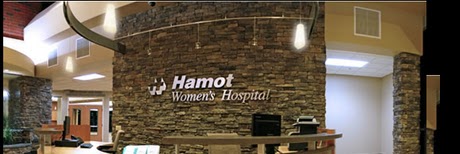
Designed by: Rectenwald Architects, Inc.
This newly constructed facility offers patients and visitors a grand 2-story entryway, 40-foot water wall, and picturesque views of nearby Presque Isle Bay and the neighboring downtown area. The interior evokes a feeling of calm and relaxation for patients and mothers-to-be with warm earth tones and comfortable furnishings. From spa-like delivery rooms to indoor “outdoor” rooms that cater to newborns and families housed in the NICU, designers use calming affects and finishes to bring comfort to all who are visiting.
5. The City Hospital – Dubai, UAE

Designed by: Ellerbe Becket, an AECOM Company
This hospital can sometimes make patients feel like they’re in a 5-star luxury hotel instead of a care facility. It offers patients and their families access to a heated indoor swimming pool, spa, sauna, Jacuzzi and gym, along with the VIP floor that has a separate entrance, elevators and valet service, with 12 suites that are designed and furnished to provide the highest levels of comfort.
4. Florida Hospital Waterman – Tavares, FL, USA

Designed by: Jonathan Bailey Associates
This hospital was designed with patients, staff, and the environment in mind. In addition to multiple staff rooms to eliminate noise and “stuffy” areas, the hospital was also designed around the natural habitat of endangered birds that call the area home. This included non-reflective exterior glass, investigations in flight patterns, and altering helicopter routes around the birds’ natural flight paths. On the exterior, an eye-catching hovering roof connects the modern addition to the hospital with one of its original buildings, while the interior boasts a hotel-like ambiance with a concierge at the entrance and soft, comforting furniture throughout.
3. Matilda International Hospital – Hong Kong, China

This modern hospital in Hong Kong is beautifully situated on the historic Victoria Peak, known informally as “The Peak”, overlooking the South China Sea on Hong Kong Island. On the inside, its “operating theater” uses innovative designs with glass paneled walls and LED lighting along with ceiling pendants to maximize the flexibility of the room.
2. Henry Ford West Bloomfield Hospital – Bloomfield, MI, USA

Designed by: Albert Kahn & Assoc.
Not only does this 160-acre hospital campus have aesthetically pleasing buildings on the exterior as well as a shopping mall-like interior, but it is also LEED (Leadership in Energy and Environmental Design) Certified for its use of natural light for heating and cooling, rainwater collection and filtration system, recycling programs, and more. With wide use of interior landscaping and design, visitors and patients almost never feel like they’re in a hospital.
1. Sharp Memorial Hospital – San Diego, CA, USA

Designed by: NBBJ
Often compared to a high-end department store or hotel, this hospital’s design is a sharp contrast to the sterile white walls and big bulky equipment that often comes to mind when we think of large medical facilities. Equipped with a separate set of elevators for patients or medical staff and the public, as well as a rooftop garden, all private rooms with pull-out couches for guests, and museum-quality paintings adorning the walls, patients and their families may be tempted to stay longer just for the fun of it.
Friday, 24 August 2012
Parents under pressure to make babies sleep at night, says study
According to a new study, experts are unnecessarily putting pressure
on the parents by telling them that newborns must sleep the night.
Several baby advisers tell parents that babies should doze off 12 weeks. However, it was fond that only about a quarter of the babies start sleeping at night when then are 12 weeks old. About 16 per cent of the parents said that children at the age of 2 also wake up sometimes during the night.
A fourth of the children in the UK wake up at 6.30 am, which means that the parents do not get adequate amount of rest. A survey found that strict bedtime routine helps children sleep on time and the method is used by about 38 per cent of the parents.
About 20 per cent say they drive them round until they go to sleep. the most favorite timing for children in the UK to sleep is between 7pm and 7.30pm. Website Netmums, which conducted the poll, said, "Parenting gurus can set unrealistic expectations of babies' sleep patterns. This study shows there is no `one size fits all' solution."
The survey included a total of 11,000 people.
Several baby advisers tell parents that babies should doze off 12 weeks. However, it was fond that only about a quarter of the babies start sleeping at night when then are 12 weeks old. About 16 per cent of the parents said that children at the age of 2 also wake up sometimes during the night.
A fourth of the children in the UK wake up at 6.30 am, which means that the parents do not get adequate amount of rest. A survey found that strict bedtime routine helps children sleep on time and the method is used by about 38 per cent of the parents.
About 20 per cent say they drive them round until they go to sleep. the most favorite timing for children in the UK to sleep is between 7pm and 7.30pm. Website Netmums, which conducted the poll, said, "Parenting gurus can set unrealistic expectations of babies' sleep patterns. This study shows there is no `one size fits all' solution."
The survey included a total of 11,000 people.
Thursday, 23 August 2012
Health experts believe hot tub is the source of Legionnaires' outbreak
Health experts looking for the source of the deadly Legionnaires' outbreak in Stoke-on-Trent have indicated that the source of the disease might have been a hot tub that was turned on for display purposes in the JTF Mega Discount Warehouse. It was found that about 18 people, who contracted the disease, visited the warehouse in the two weeks duration.
The Health Protection Agency (HPA) said that a sample taken from the hot tub in the store on City Road in Fenton contained a rare strain of legionella bacteria that was matched with that in the patients.
Doctors are treating eight people with Legionnaires' disease at the hospital after one person died over the weekend due to the deadly water infection spread. A patient was shifted to Glenfield hospital, Leicester, in a critical but stable condition. Health experts say that all of those affected with the disease in the outbreak in Stoke are aged between late 40s and mid-70s.
Legionnaire's disease is caused when a person inhales small droplets that are contaminated with legionella bacterium. Experts say that the Legionnella bacteria can travel for miles through the air. Experts have rinsed16 cooling towers with chlorine to contain the disease and if a cooling tower is confirmed to the source of the infection then further cleaning will be undertaken.
Decisions made in womb linked to infants’ body fatness
During pregnancy, if the supply of nutrients from the mother through the placenta is limited or unbalanced, the developing baby faces a dilemma: should resources be allocated to brain growth, or to fat deposition for use as an energy reserve during the early months after birth?
Scientists at the University of Southampton have shown that the decision made could have an effect on how fat we are as children.

They measured the blood flow from the placenta to the unborn baby, and the distribution of this blood to either the liver of the baby or bypassing the liver to supply the brain and heart. This was then compared with the infant's body fatness at birth and at four years old.
The findings show that greater blood flow to the baby's liver in late pregnancy was associated with greater body fatness in the infant at birth and at age four. In contrast, lower liver blood flow and a "brain-sparing" blood flow pattern
(when the blood bypasses the liver and goes to the brain) occurred when the placenta was smaller and less able to meet baby's demand for essential nutrients in the womb.
These findings were independent of an association between mother's body fatness and the body fatness of her infant.
"In our evolutionary past, the demands of a big brain have led the unborn baby to develop blood flow responses which preserve nutrient delivery to the brain when the supply of essential nutrients from the mother cannot meet the baby's requirements," explained Keith Godfrey, Professor of Epidemiology and Human Development, at the University who led the study.
"However, having a big brain has also led to evolution of a strategy to adjust blood flow through the baby's liver, which enables the liver to produce more fat - this acts as an energy reserve, protecting brain development during periods of illness or under-nutrition in early infancy. Our data suggests that evolution of this strategy has brought with it a predisposition to obesity and later diabetes in contemporary societies with abundant nutrition in later postnatal life," he said.
Professors Guttorm Haugen from the University of Oslo and Torvid Kiserud from the University of Bergen were part of the research team.
They commented: "An interpretation of our findings is that there could be programmed effects on the liver that arise from blood flow adaptations in the womb and predispose individuals to gain excess body fat. Although further studies are needed, our findings add weight to current concerns that the current epidemic of childhood obesity and associated disorders may partly have its origins through adaptations made by the developing baby during pregnancy."
Subscribe to:
Posts (Atom)